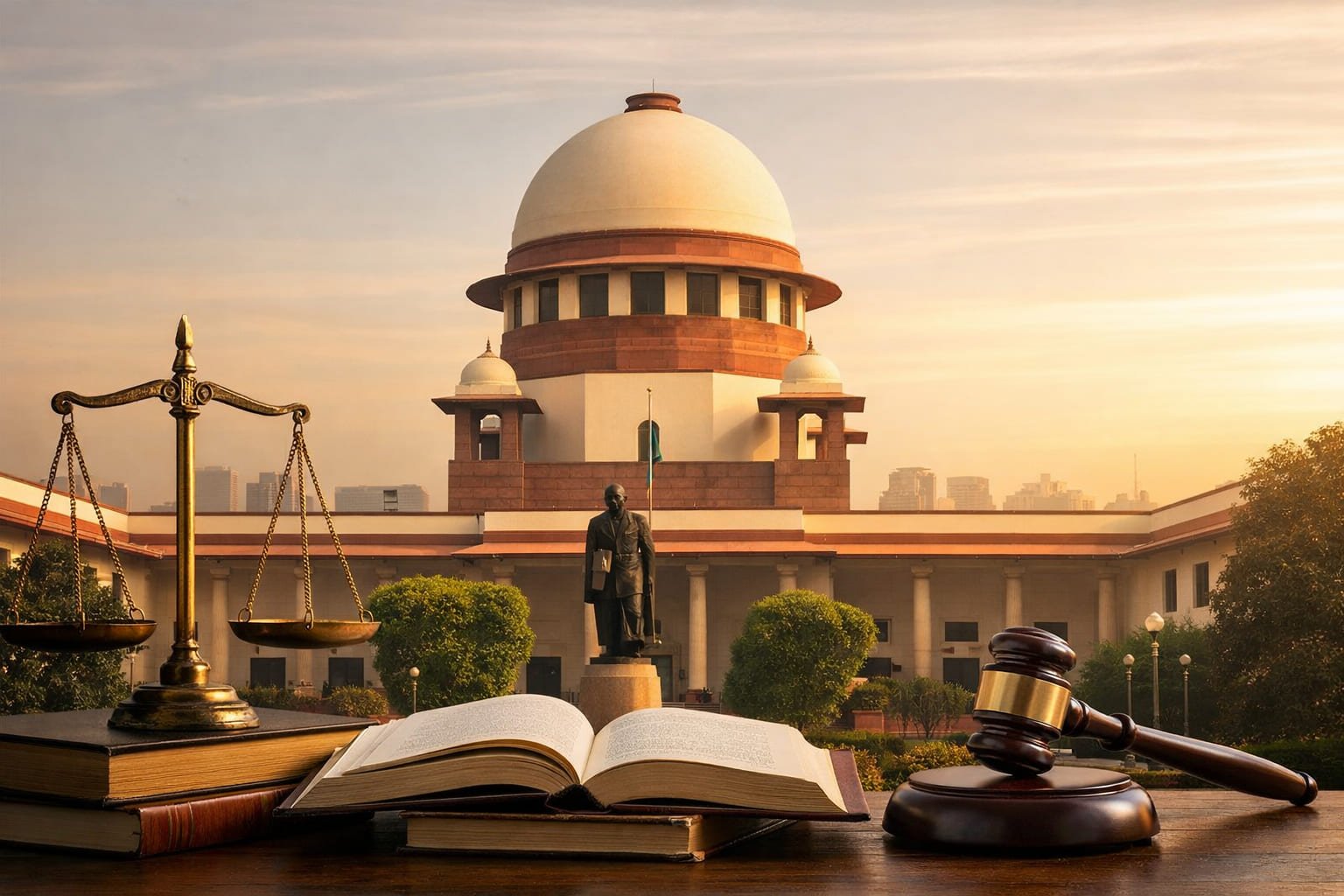
The Supreme Court of India stands at the apex of the Indian judicial system. While litigants generally exhaust remedies before lower courts and High Courts, there are situations where substantial injustice, grave legal errors, or constitutional questions compel intervention by the Supreme Court. One of the most important legal remedies available in such circumstances is the Special Leave Petition (SLP) under Article 136 of the Constitution of India.
Filing an SLP is not a routine legal exercise. It requires a deep understanding of constitutional principles, Supreme Court practice, procedural compliance, and strategic drafting. This is where experienced Supreme Court advocates play a decisive role. At Patrons Legal, we assist clients across India in filing and pursuing SLPs in criminal, civil, commercial, family, and constitutional matters before the Supreme Court.
This detailed guide explains how to file an SLP in the Supreme Court of India, the legal framework governing it, procedural steps involved, and how Patrons Legal ensures a meticulous and result-oriented approach at every stage.
Understanding Special Leave Petition (SLP) Under Article 136
A Special Leave Petition is a constitutional remedy that allows a party aggrieved by a judgment, decree, order, or sentence passed by any court or tribunal (except military tribunals) to approach the Supreme Court.
Unlike statutory appeals, an SLP is not a matter of right. The Supreme Court has discretionary power to grant or refuse leave to appeal. The Court exercises this power sparingly and only in cases involving:
-
Substantial questions of law
-
Gross miscarriage of justice
-
Manifest illegality or perversity in the impugned judgment
-
Violation of fundamental rights
-
Issues of public importance
Because of this discretionary nature, drafting and presenting an SLP requires exceptional legal precision.
When Can an SLP Be Filed in the Supreme Court?
An SLP can be filed against:
-
Judgments or orders of a High Court
-
Decisions of tribunals, appellate authorities, or quasi-judicial bodies
-
Final or interim orders (in rare and exceptional circumstances)
Common Matters Where SLPs are Filed
-
Criminal convictions or acquittals
-
Bail and anticipatory bail matters
-
Divorce and family disputes
-
Property and civil disputes
-
Arbitration and commercial litigation
-
Service matters
-
NDPS, CBI, ED, and economic offence cases
At Patrons Legal, we first assess whether the case meets the threshold for Supreme Court intervention, avoiding unnecessary litigation and expense for clients.
Time Limit for Filing an SLP
Timelines are crucial in SLP matters. Delay without sufficient cause often leads to dismissal at the threshold.
Limitation Period:
-
90 days from the date of the High Court judgment/order
-
60 days if the SLP is filed against an order refusing review
In case of delay, a condonation of delay application must be filed explaining each day’s delay with supporting reasons. The Supreme Court scrutinizes delay applications strictly.
Step-by-Step Process to File an SLP in the Supreme Court of India
Step 1: Detailed Legal Evaluation of the Case
Before drafting an SLP, it is essential to evaluate:
-
Whether all alternate remedies have been exhausted
-
Whether the case raises a substantial question of law
-
Whether the High Court judgment suffers from legal perversity
At Patrons Legal, senior advocates conduct a comprehensive case analysis, examining trial court records, appellate findings, and applicable Supreme Court precedents.
Step 2: Collection of Certified Documents
The following documents are mandatory for filing an SLP:
-
Certified copy of the impugned High Court judgment/order
-
Copies of pleadings filed before lower courts
-
Trial court and appellate court orders
-
Relevant annexures and exhibits
-
Review petition order (if filed)
-
Affidavit of the petitioner
-
Vakalatnama
Incomplete or defective documentation can lead to registry objections or dismissal.
Step 3: Drafting the Special Leave Petition
Drafting is the most critical stage of an SLP. The petition must clearly demonstrate why the Supreme Court should exercise its discretionary jurisdiction.
An SLP typically includes:
a) Synopsis and List of Dates
A concise overview of facts and procedural history in chronological order.
b) Questions of Law
Clear formulation of substantial legal questions that merit Supreme Court consideration.
c) Grounds for Special Leave
These include:
-
Errors of law
-
Misinterpretation of statutes
-
Ignoring binding precedents
-
Violation of principles of natural justice
-
Constitutional infirmities
d) Prayer Clause
Specific reliefs sought from the Supreme Court.
At Patrons Legal, SLP drafting is handled by Supreme Court practitioners with extensive experience, ensuring persuasive legal reasoning and compliance with Supreme Court drafting standards.
Step 4: Filing the SLP in the Supreme Court Registry
The SLP is filed either:
-
Physically at the Supreme Court filing counter, or
-
Through e-filing, as per the Supreme Court rules
Court fees, vakalatnama, affidavits, and indexing must strictly comply with procedural requirements.
Step 5: Removal of Registry Defects
After filing, the Supreme Court Registry scrutinizes the petition and may raise objections such as:
-
Formatting issues
-
Missing documents
-
Improper affidavits
-
Pagination or annexure errors
Defects must be cured within the prescribed time. Failure to do so can result in dismissal for non-prosecution.
Patrons Legal ensures swift defect clearance, avoiding procedural delays.
Step 6: Listing and Admission Hearing
Once defects are cleared, the matter is listed before a Supreme Court bench for an admission hearing.
At this stage:
-
The Court decides whether to grant leave
-
The respondent may or may not be issued notice
-
The SLP may be dismissed, disposed of, or converted into a civil/criminal appeal
Effective oral submissions at this stage are crucial. Most SLPs are dismissed at admission, making experienced Supreme Court advocacy indispensable.
Step 7: Grant of Leave and Conversion into Appeal
If the Court grants leave:
-
The SLP becomes a regular appeal
-
The matter proceeds for final hearing
-
Detailed arguments on merits are advanced
Patrons Legal continues representation through final disposal, including interim reliefs and compliance proceedings.
SLP in Criminal Matters: Special Considerations
Criminal SLPs require urgent and sensitive handling, especially in cases involving:
-
Conviction and sentencing
-
Bail rejection or cancellation
-
NDPS and economic offences
The Supreme Court may grant interim protection, suspension of sentence, or bail depending on the facts.
Patrons Legal has extensive experience handling criminal SLPs, ensuring prompt filings and strategic relief-oriented advocacy.
Common Reasons Why SLPs are Dismissed
Understanding why SLPs fail helps in avoiding costly mistakes:
-
Absence of a substantial question of law
-
Re-appreciation of facts only
-
Delay without justification
-
Poor drafting
-
Non-compliance with Supreme Court rules
Our approach at Patrons Legal is to file only legally sustainable SLPs, maximizing chances of admission.
Role of Supreme Court Advocates in SLP Matters
An SLP demands:
-
Mastery over constitutional law
-
Familiarity with Supreme Court practice and benches
-
Ability to identify appeal-worthy issues
-
Strong drafting and oral advocacy skills
Patrons Legal works with seasoned Supreme Court advocates who bring credibility and courtroom experience to every matter.
Why Choose Patrons Legal for Filing an SLP?
Patrons Legal is a reputed law firm with over 45 years of legal excellence, known for handling complex litigation across all major courts in India.
Our Strengths:
-
Dedicated Supreme Court practice
-
Senior advocates and expert litigators
-
Strategic case evaluation
-
High-quality drafting and research
-
Transparent communication with clients
We handle SLPs in:
-
Criminal law
-
Family and matrimonial disputes
-
Civil and property matters
-
Commercial and arbitration cases
-
Constitutional and writ matters
Cost of Filing an SLP in the Supreme Court
The cost varies depending on:
-
Nature and complexity of the case
-
Volume of records
-
Urgency of filing
-
Senior counsel engagement
At Patrons Legal, we maintain transparent fee structures, ensuring clients are informed at every stage.
Conclusion
Filing a Special Leave Petition in the Supreme Court of India is a serious legal step that requires precision, experience, and strategic foresight. Given the discretionary nature of Article 136, only well-drafted and legally sound SLPs stand a realistic chance of admission.
With a legacy of excellence and a dedicated Supreme Court practice, Patrons Legal provides comprehensive legal assistance from evaluation to final adjudication. If you believe your case involves a grave injustice or a substantial question of law, seeking timely advice from experienced Supreme Court lawyers can make all the difference.





Leave a Reply